
A Different Path
Learning is a journey, not a race to be won.

When my kids were still in public school, most evenings went something like this.
Get home from school about 4 and start homework
Dinner at 5
Finish up homework
Family or personal time
Bed time
When my kids were in elementary it wasn’t too big of a deal. Most nights we ended the homework before dinner.
But when junior high hit, it was a different story.
My oldest had hours of homework. Some nights she was up until 10 or 11 trying to get the next day’s assignments completed.
We were losing family time, fast.
Dinner. Bed. Repeat.
That was how our school year went. It felt like a race we couldn’t win.
Looking back, I keep thinking about this question:
What did we lose?
Time, obviously. But something else too.
School Has Become a Competition
We grade eggs. We grade beef. And somewhere along the line we started grading kids.
The standardized school said that most kids are able to read by 3rd grade.
So any kid who couldn’t must be behind.
School has become this competition, a judgement on whether or not my kid is “good.”
My wife and I felt it.
When one child brought home Ds or Fs, we felt we had failed as parents.
So I started digging into where grades came from.
Are you enjoying this article?
Subscribe below to get all of my articles right when they post.
Failing Grades
Grades. Tests. Graduation rates. ACT or SAT.
They were all there to tell parents one thing: has my child learned.
You may find this hard to believe, but the grading system we have today did not become widespread until the 1940s.
Horace Mann, the “Father of Public Education,” said this about grades, “if superior rank at recitation be the object, then, as soon as that superiority is obtained, the spring of desire and of effort for that occasion relaxes.”
And if students chase those ranks, they will “incur moral hazards and delinquencies.”
The guy who started standardized school rejected grading. He knew it would lead to decreased learning.
But here’s the thing: grades don’t measure learning.
They measure something else.
Compliance. Speed. Whether a kid can perform on command.
Many teachers decrease grades if a student turns it in late.
Don’t get me wrong. Learning to do something on a timetable is a valuable skill.
But when that becomes part of that grade, it now has nothing to do with learning.
GPA has become the way to measure the worth of a student. Well meaning, but misguided, administrators have begun asking teachers to change grades, raise them, in order to save the self-worth of the student.
Grades have become meaningless.
Our family life got better when we stopped caring about grades, and started caring about our kids.
A Peaceful Forest Trail
Jenny Phillips, founder of The Good and the Beautiful, put words to this better than I can.
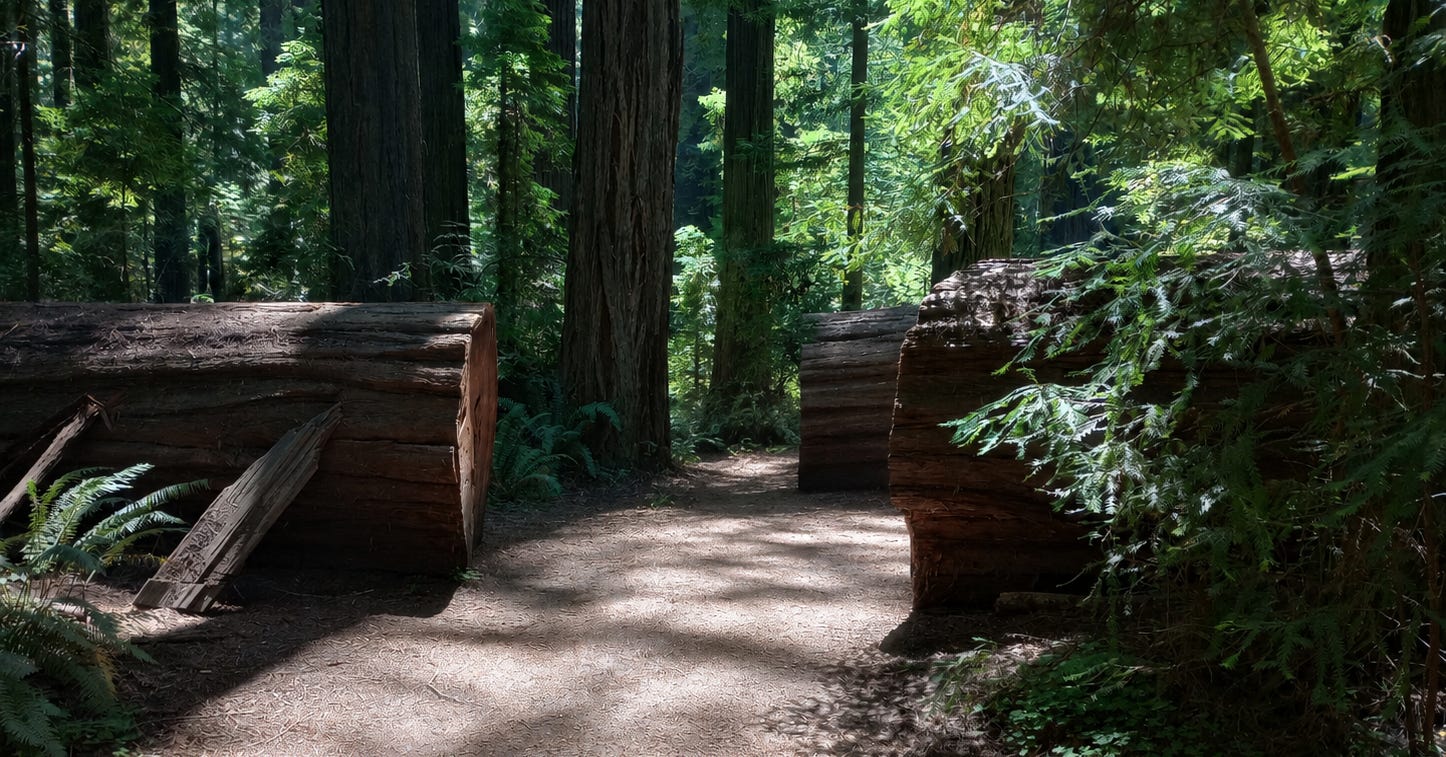
She describes leaving traditional schooling as trading a high-pressure, crowded racetrack for something else entirely. She calls what’s on the other side of that trade “a peaceful forest trail.”
She continues, “A successful childhood does not revolve around reading early, doing well on standardized tests or being ahead of others.”
She asks a question that I haven’t been able to shake. Is there enough time and space left over for a kid to take care of their own health, to pray, to serve someone else, to sit in nature, to read a good book just because they want to, to pick up a hobby with no purpose beyond enjoying it?
For a lot of families, the honest answer is no. There isn’t room left in the day.
The things a lot of families build a childhood around, like a varsity roster spot or a scholarship, are almost always gone within a few years of graduation.
And when that is gone, what is left?
Lifelong Learning
Schools talk about lifelong learning. It’s become cliche’. What does it mean?
For me, it means my kids are curious, and they know how to follow their curiosity. Sometimes they will go deep into a topic. Sometimes they will only spend an hour.
I want my kids to know the basics. So we spend time each day working on that. But that only takes an hour or two. They get to spend the rest of their time exploring the world around them.
When they were younger, that meant imaginative stories, riding their bikes around the neighborhood, and playing with friends.
As teens, it shifts, but the creative side of them still exists. My 18-year-old wrote her first book this year. 117,000+ words. High schoolers don’t do that unless they like it.
My 14-year-old has taken a different path. Sewing. Over the past 2 months she’s sewn 5 dresses and a costume for her sister.
Different paths, but same result. Curiosity led to passion. That passion has led to increased skill.
That is lifelong learning. Both may decide in 5 years that they don’t want to do it anymore. That’s fine. They know how to follow their curiosity.
This is what learning is supposed to be. A trail through the woods filled with wonder. Relaxing. Fun. Filled with joy.
It isn’t a race. Nor a task to be completed. You don’t learn by checking boxes.
Much love,
Principal Jon
Thanks for reading. If you enjoyed this article, please subscribe.